Collection: Solubilisants

Livraison gratuite au Royaume-Uni continental

Expédition le jour même*

2 produits

Filtrer et trier

Affichage de 2 produits sur 2

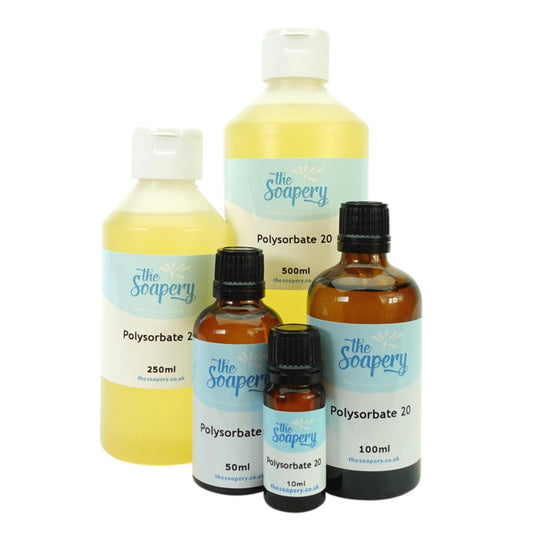
  • Polysorbate 20

    Polysorbate 20

    Prix habituel
    Du €4,95
    Prix soldé
    Du €4,95
    Prix habituel
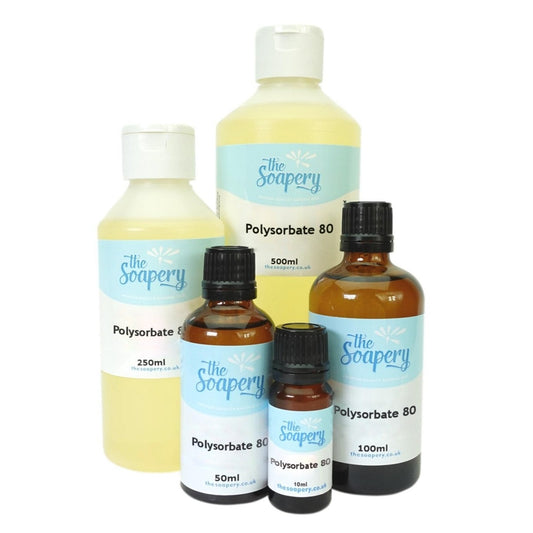
  • Polysorbate 80

    Polysorbate 80

    Prix habituel
    Du €4,95
    Prix soldé
    Du €4,95
    Prix habituel

Pourquoi choisir The Soapery ?

  • Livraison gratuite au Royaume-Uni (continent)

    Procurez-vous rapidement vos ingrédients sans frais supplémentaires.

  • Expédition le jour même*

    Commandez avant 15h pour que votre colis soit envoyé le jour même.

  • Prix bas

    Pas de marketing clinquant ni de fausses promesses se traduit par de grandes économies.

  • Fournisseurs éthiques

    Aucun scrupule ici. Nos ingrédients proviennent de sources éthiques et durables.

À propos de Solubilisants

Vous travaillez avec de l'huile et de l'eau ? Nous avons la solution parfaite. Rendez l'insoluble soluble avec des solubilisants. Ces produits essentiels aident les huiles à se dissoudre dans l'eau, ce qui donne des formulations claires et stables pour tout, des sprays d'ambiance aux bombes de bain.

En savoir plus sur les solubilisants cosmétiques

Perfectionnez vos formulations les plus complexes.

Créer une formule cosmétique stable peut être délicat même dans les meilleures conditions – mais carrément difficile lorsqu'il s'agit d'eau et d'huiles. Heureusement, nous avons la solution. Avec le bon solubilisant à portée de main (ou dans votre placard d'artisanat), mélanger des recettes huile dans eau faites pour durer est aussi simple que un, deux, trois. Pourquoi ne pas l'essayer par vous-même ? Parcourez notre gamme sélectionnée d'agents solubilisants dès aujourd'hui !

Que sont les solubilisants cosmétiques ?

Les solubilisants sont l'arme secrète des fabricants, issus des familles des émulsifiants et des tensioactifs. Du Polysorbate 20 au 80, ces ingrédients de niche offrent des capacités de transformation de formules aux fabricants de parfums, aux artisans de produits de toilette et à tous les autres.

Mais que sont-ils exactement ? Bien qu'ils appartiennent au même groupe – affichant ces merveilleuses caractéristiques hydrophiles et lipophiles – ces ingrédients sont un peu plus exigeants que leurs frères et sœurs émulsifiants et tensioactifs ! La différence clé ? Ils dissolvent facilement des ingrédients autrement insolubles dans l'eau plutôt que de simplement créer un mélange homogène.

Les solubilisants font également un excellent travail lorsqu'ils sont mélangés à parts égales avec des huiles. À tel point qu'ils sont l'une des meilleures options possibles pour distribuer uniformément des parfums comme les huiles essentielles, et un excellent choix pour créer une formule cristalline ! N'oubliez pas qu'il est toujours préférable de faire des recherches afin de trouver les meilleurs ratios et recettes.

Nos solubilisants peuvent être utilisés dans les lotions, les sprays d'ambiance, les mélanges de parfums, les crèmes, les shampooings, les gels douche, les bombes de bain et les gels douche.

Comment utiliser les agents solubilisants en cosmétique

Les solubilisants, comme leur nom l'indique, sont utilisés pour solubiliser de petites quantités d'huiles ou d'ingrédients liposolubles (comme les huiles essentielles ou les huiles parfumées) dans des concoctions principalement aqueuses (comme les toniques), et pour ajouter des propriétés hydrosolubles aux produits anhydres (comme une huile nettoyante ou des bombes de bain).

Il existe de nombreuses options disponibles, chacune avec ses propres forces et faiblesses – assurez-vous donc de faire vos recherches et de bien tester avant de vous engager dans une nouvelle formule ou recette !

Bien sûr, la quantité de solubilisant requise dépend de vos ingrédients et de votre processus – plus vos huiles sont polaires, moins il en faut. Prenez, par exemple, le polysorbate 20. Ce solubilisant fonctionne mieux dans les formules douces et doit être utilisé à parts égales avec les huiles.

Une fois que vos huiles sont bien solubilisées, ajoutez-les simplement à votre mélange principal d'ingrédients et continuez à fabriquer, que ce soit pour les mouler en bombes de bain ou les mettre en bouteille pour les utiliser. Le résultat final devrait être lisse, facile à étaler et sans ces redoutables couches d'huile ou bulles !

Les avantages des solubilisants cosmétiques

Ces ingrédients révolutionnaires ne sont certainement pas à prendre à la légère ! Offrant aux fabricants du monde entier la possibilité de véritablement mélanger même les ingrédients les plus polarisants, ils sont un incontournable dans tout, des huiles parfumées aux toniques faciaux.

Nos clients adorent nos solubilisants pour leurs propriétés dispersantes et dissolvantes. Sans eux, leurs formules huile dans eau s'effondreraient - littéralement ! Créant facilement un mélange homogène, ces petites aides donnent à chacun la chance de créer un produit final magnifiquement efficace et uniforme.

Au-delà de cela, les solubilisants offrent également une stabilité. Leurs propriétés tensioactives les aident à lier les ingrédients ensemble plus longtemps, protégeant les formules fraîches de la séparation au fil du temps et garantissant que vos créations procurent la sensation attendue sur la peau.

Convaincu ? Nous le sommes absolument ! Parcourez notre sélection de solubilisants dès aujourd'hui pour des ingrédients de première qualité, des prix transparents et une livraison rapide et gratuite.

CE QUE DISENT NOS CLIENTS

Nous accordons de l'importance à chacun de nos clients

Accréditations/Récompenses

Nous nous engageons à offrir une vaste gamme de produits entièrement naturels et biologiques certifiés par la Soil Association, et nous sommes fiers de contribuer à la protection de notre environnement.

Comme la plupart des ingrédients, les huiles, beurres, poudres et décorations de vos produits faits à la main sont cultivés ou extraits du monde naturel. Ceux qui sont certifiés biologiques par la Soil Association ont été cultivés, produits et récoltés conformément à des réglementations strictes visant à protéger et à maintenir l'environnement, y compris les sols, les écosystèmes, les animaux et les personnes.

Acheter Solubilisants : FAQ

Vous ne trouvez pas les réponses que vous cherchez ? N'hésitez pas à contacter notre équipe à l'aide de notre formulaire de contact ou sur les réseaux sociaux. Nous serons ravis de vous aider.

What do solubilisers do?

Solubilisers are key players in the world of cosmetics, particularly when it comes to blending oil and water. These ingredients, like Polysorbate 20 and 80, have a talent for making oil-based components (think essential oils) compatible with water, ensuring a clear, stable end product. 

Solubilisers reduce the surface tension between oil and water, allowing them to mix without separating. This not only improves the product's stability but enhances the effectiveness of oil-based active ingredients, ensuring they're evenly distributed and easily absorbed by the skin. They're crucial in products where performance, clarity, and consistency matter, like bath bombs and facial toners.

How do solubilisers work?

Solubilisers are ingredients group closely related to surfactants and emulsifiers. In simple terms, they’re used to help other ingredients disperse and dissolve in a liquid - particularly oil in water. 

On a molecular level, these ingredients boast both hydrophilic and lipophilic properties - which, collectively, allow them to bridge the gap between oil and water - creating smooth formulas where separation would normally take place. Whilst they’re completely water soluble, solubilisers can only combine small amounts of water with oil, making them the perfect choice for formulas requiring only tiny drops of oil-based ingredients like essential oils. 

You’ll often see them in recipes requiring an oil-in-water mix including toners and sprays, or in products such as body or foot scrubs (helping them wash off more easily).

Are solubilisers natural?

The cosmetics world has plenty of solubilisers to offer - some natural, and some not. Be sure to review each and every option available for suitability before making your final choice! 

In some circumstances, a more synthetic option is the way to go. Polysorbate 20 and Polysorbate 80 are both commonly used as solubilisers and emulsifiers in cosmetic and personal care formulations. While they do originate from natural sources, they undergo chemical modifications, which is why they aren't considered 100% natural.

Both start from sorbitol, a sugar alcohol derived from fruit.This sorbitol is then ethoxylated, meaning it undergoes a chemical reaction with ethylene oxide. The resultant compound is then reacted with lauric acid (for Polysorbate 20) or oleic acid (for Polysorbate 80) to produce the final product.

Because of the introduction of ethylene oxide and the various chemical reactions involved, even though they start from a natural ingredient, Polysorbate 20 and Polysorbate 80 are often viewed as synthetic or semi-synthetic compounds in the cosmetic world.

It's up to you to decide what type of solubiliser to use in your recipes - however, some are more suited to certain uses than others. Be sure to do your research before making your choice! 

What is the best solubiliser for bath bombs?

The best solubiliser for a bath bomb mainly depends on the specific ingredients used, and the desired result. With this being said, Polysorbate 80 is a popular choice across the board. 


Thanks to its strong ability to disperse oils, fragrances, and pigments such as mica in water (therefore helping prevent uneven distribution and stains on the bath), Polysorbate 80 is considered by many of our customers to be one of the best bath bomb solubilising options out there. 

Choosing a solubiliser? It’s always a good idea to test your purchases in small batches to find what works best for your particular formula and desired result.

What’s the difference between polysorbate 80 and polysorbate 20?

Polysorbate 20 and Polysorbate 80 are both solubilising agents, meaning they can be used to help dissolve oil-based ingredients in water-based solutions. They’re commonly found in formulas for lotions, shampoos, body washes, fragrance sprays, and facial toners working to either evenly distribute essential oils or lipophilic ingredients. 

Both are derived from sorbitan, which is produced from naturally occurring sugar alcohols.

In addition to being solubilisers, these polysorbate variants can also act as emulsifiers, making them a brilliant addition to creams and butters. Both options produce the same skin feel. 

The differences between the two include: 

-Polysorbate 80 is slightly better at solubilising vegetable oils, especially those with high amounts of unsaturated fats.

-Polysorbate 20 is mainly used in non-skin products, whereas Polysorbate 80 is used more in wash off skin products.

-Polysorbate 20 can be used to make surfactants more gentle.

-Polysorbate 20 will pull the pH of a formula towards the acidic end – something you should consider if you’re using geogard ultra as a preservative.

What is solubiliser for essential oils?

Essential oils are used in everything from soap to cosmetics and beyond for their lovely scents and skin-loving properties. Whether lavender, chamomile, sweet orange, or patchouli, you’re almost guaranteed to have come across these intense ingredients in one form or another. As commonly as they’re used in recipes, working with essential oils alone can be tricky, as they don’t mix well with water. This is where solubilisers come into play. When added to a small quantity of essential oil, these ingredients can help create a smooth and stable mixture - with no lumps or oil films to be seen.

How do I choose the right cosmetic solubiliser for my product?

When choosing a cosmetic solubilizer for your next creation, there are a few factors to keep in mind. Our experts recommend sticking to the following simple checklist in order to make the best possible choice:

Firstly, consider your recipe or formulation. Most solubilisers can dissolve completely in water with ease but are pickier with oils. Make sure you’ve got your concentrations in order, and have chosen the best possible match for your existing ingredient list.

Your final product should also be taken into account. Some solubilisers are brilliant in bath bombs, whilst others are best paired with fragrance sprays. Be sure to do your research!

It's also important to think about the consistency and feel of your final product. Different solubilisers can create different textures - meaning it’s important to select the right one for your ideal feel. 

Are there any safety concerns when using cosmetic solubilisers?

Our experts recommend following all of the typical soap making guidance when using solubilisers for the best possible results, and for your own safety, as, when used improperly, they can be harsh on the skin. These include taking precautions against irritation to the skin and eyes - be sure to wear eye protection and gloves when handling any kind of solubiliser, in addition to patch testing prior to use. 

Another concern is that some solubilisers can be toxic if ingested. It's important to keep your solubilisers and other ingredients out of reach of children and pets, and, of course, to never ingest them yourself.

Finally, be sure to check the use-by dates on your solubilisers’ packaging. In order to ensure they last up until this date, store them in a cool, dry place to prevent spoilage and bacteria growth.

Why is solubilisation important in cosmetic formulations?

Solubilisation is a foundational principle in cosmetic science. At its core, it addresses the challenge of combining oil and water, two components that are inherently ‘unmixable’. Without effective solubilisation, many cosmetic formulations would lack the uniform consistency desired, resulting in separated mixtures that are neither aesthetically pleasing nor functionally effective.

Solubilisers play a critical role in ensuring that oils integrate seamlessly into aqueous solutions, be it toners, sprays, or other water-based products. This integration not only provides a consistent texture but also guarantees uniform delivery of active ingredients in every application – key to the success of any cosmetic product. 

What’s the difference between solubilisers and emulsifiers?

Solubilisers and emulsifiers both play vital roles in cosmetic and toiletry creations, but serve distinct purposes.

Solubilisers are a great option for anyone looking to dissolve small amounts of oil-soluble ingredients into recipes made up mainly of water, resulting in clear solutions, and are the perfect choice for maintaining clarity in a formula. 

Emulsifiers, on the other hand, create stable mixtures of oil and water, producing emulsions that can range from opaque to creamy. This is achieved by reducing the surface tension between the oil and water phases.

In essence, while both are crucial for blending oil and water, solubilisers ensure clarity, whereas emulsifiers focus on stability and texture.